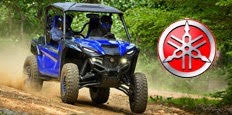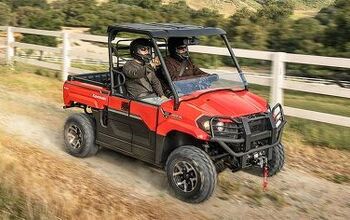
Yamaha is trying to put a stop to all of the negative rhino publicity by launching a new website with Accurate Information; Encourages Enthusiast and Industry Support.
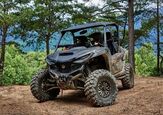
Yamaha Motor Corp., U.S.A., has launched www.TruthAboutRhino.com. The new Web site has been created to provide accurate information about Yamaha and its Rhino Side-by-Side (SxS) vehicles, to combat a recent flurry of inaccurate information and negative advertisements targeting the vehicle, and to encourage Rhino customers and the off-road industry to show their support for the SxS segment.
From the original 2004 Rhino 660 introduction to present day, TruthAboutRhino.com documents key points in the history of the vehicle. Some sections of the site offer Yamaha’s safety recommendations and product specifications, while others highlight the many awards and accolades that the Rhino has received. Visitors to the site can find Yamaha history and general corporate background, and Rhino customers and enthusiasts can “Rally Around the Rhino” by filling out an online form or emailing messages or questions to: info@truthaboutrhino.com.
“With TruthAboutRhino.com, Yamaha has created a home for accurate information about our company and the Rhino product line, and we’re encouraging our customers and the industry to show their support,” said Steve Nessl, Marketing Manager for Yamaha’s ATV & SxS Group. “We’ve seen a disproportionate amount of negative and inaccurate information distributed recently, so we wanted to create a place where our customers, the general public and the news media can get the real facts.”
The new Web site includes background information on Yamaha and the Rhino, details on the March 31, 2009, Consumer Product Safety Commission repair program announcement (which has been inaccurately described as a recall), and provides a platform for Rhino fans and off-road enthusiasts in general to show their support.
“What has been lost in the firestorm of negative, inaccurate information about the Rhino is that the vast majority of our customers and SxS enthusiasts absolutely love their vehicles and its role in pioneering the SxS segment in the industry,” Nessl said. “In reality, statistics show that more than 99 percent of Rhino customers have never reported any claim or incident, a fact never mentioned in the plaintiff attorney ads or Web sites where they troll for new clients. We decided it was time to create a home online for ourselves where accurate information about our vehicle can be found.”
Yamaha’s Rhino safety recommendations and guidelines, which are posted on TruthAboutRhino.com, include:
· Drivers must be 16 years or older and have a valid motor vehicle license. Children under 16 should never drive a Rhino.
· To ride in a Rhino, a passenger must be tall enough to place both feet flat on the floorboard with his or her back against the seat back and be able to reach the passenger hand holds.
· Driver and passenger should always wear seatbelts and protective gear/clothing including: Helmet, Eye protection, Gloves, Over-the-ankle boots, Long sleeves and Long pants.
· Drivers and passengers should stay completely inside the vehicle at all times.
· Rhinos are designed for off-road use only. They should never be operated on public roads or paved surfaces.
· As with any motor vehicle, safety features are no substitute for driving responsibly. Avoid aggressive or reckless use of the Rhino.
· For more safety recommendations, please check out the Recreational Off-Highway Vehicle Association web site at: www.ROHVA.org .
Some customer and fan feedback is also already posted on the site, including a video compilation from the most recent Rhino Rally in Glamis. Yamaha plans to update the site on a regular basis with more news, fun events, photos, videos and comments from the public.
“Rhino customers are our biggest supporters and the most enthusiastic about SxS vehicles and Yamaha,” Nessl said. “We look forward to their feedback on the TruthAboutRhino.”
About Yamaha Motor Corp., U.S.A.
Yamaha Motor Corporation, U.S.A. (YMUS), a leader in the motorsports market, offers the toughest, most capable and versatile ATV and Side-by-Side vehicles. The company’s ever-expanding line of products also include motorcycles, outboard motors, personal watercraft, snowmobiles, boats, outdoor power equipment, race kart engines, accessories, apparel and much more. YMUS products are sold through a nationwide network of more than 4,000 dealers in the United States.
Headquartered in Cypress, Calif., since its incorporation in 1977, Yamaha also has facilities in Wisconsin and Georgia, as well as factory operations in Tennessee and Georgia. For more information on Yamaha, visit www.yamaha-motor.com.
To dicuss this with other rhino owners, please visit RhinoForums.net, the world’s largest Rhino enthusiast website!


July 11, 2009
#1
I put 2300 miles on my 07 Rhino with no rollover issues. The only rollover issues I know about on Rhino’s were because of
kids under 16 driving, and adults driving under the influence. It is too bad a few did not heed the warnings and want Yamaha to pay.
October 19, 2009
#2
I have left messages on the truthabout rhino’s website and asked a few questions – todate I have not had a response from Yamaha – my daughter was seriously injured in January 2009 in one of these vehicles and has not been able to walk for the past 2 years un-aid – so I am not sure how good the website is or if they only want good messages and the negatives get lost somehow – regards SOUTH AFRICA
January 9, 2010
#3
Hello, I am the proud owner of a 2006 Rhino. I have put well over 2000 miles on my Rhino. I have put many more miles on 2 other Rhinos. I am truly saddened to hear about people getting injured while trying to have fun. My questions: Did these people that were injured read the owners manual? Did they have on proper riding gear? What is the skill level of their driving/riding ability? (If under 18): Did they have parental permission? Did the parents teach them or read the manual with them? I do not wish to point the finger at anyone other than the operator and the ignorance of that person. I mean that in the literal sense. I do not see how a Rhino can be tipped over let alone rolled over without wild and reckless abandon. I have tipped my Rhino on it’s side due to exceeding the limits given by Yamaha by well over twice the amount. This is the reason for my questions- I drove my Rhino with total disregard for the cautions given and it took a LOT to tip it over, let alone roll it over. I am not trying to offend anyone that has an issue – I would just like to understand why the prices of the Rhino are getting higher all the time. Are these lawsuits really the fault of Yamaha or the negligent operator? Should Yamaha install an inclinometer on the Rhino with red marks for those that cannot judge what is to far and/or safe? Should people be required to have a ’special’ license? Maybe they should supply an adjustable speed limiter for those that do not adhere to Yamaha’s recommendations. All these of course would increase the price of a Rhino also. I used to race and I never once thought of suing the company of the motorcycle I was riding after I wrecked. If Yamaha had a faulty part that was breaking under normal use and ignoring the fact and people were getting hurt, well maybe thats a good reason to sue and get Yamaha’s attention – is that what is happening to the people that are getting hurt? If that is the case- I can understand and may God bless anyone hurt or worse due to Yamaha’s negligence- if not- well…. Now I will try to offend someone: If you have legal action against Yamaha due to a Rhino issue – are you the person that stuck your hand in a running blender and tried to sue Kitchenaid? Or are you the person driving about 30-35 mph through vendor row while cranking the steering wheel back and forth- with a full rollcage and 3 passengers. Yup, its those kind of people that would probably sue if something happened. Thanks for making the rest of us pay more because you have no common sense, there…I said it.